Table of Contents
ToggleIntroduction To Camera Phone Buying Guide 2025
Smartphones have revolutionized the way we take pictures. What once required a bulky DSLR is now possible with a sleek device in your pocket. But when it comes to buying a new phone, camera specifications can be confusing: megapixels, sensor size, aperture, pixel binning, OIS, AI enhancements – the list goes on.
One of the most common myths is: “Higher megapixels = better camera.” While megapixels matter, they are not the only factor. The sensor size, lens quality, image processing, and software play an equally important role.
In this detailed buying guide, we’ll explain megapixels vs sensors, how they affect photography, and what you should look for when buying your next camera phone in 2025.
📌 What Are Megapixels?
Definition: 1 Megapixel = 1 million pixels.
The higher the megapixels, the more detail an image can theoretically capture.
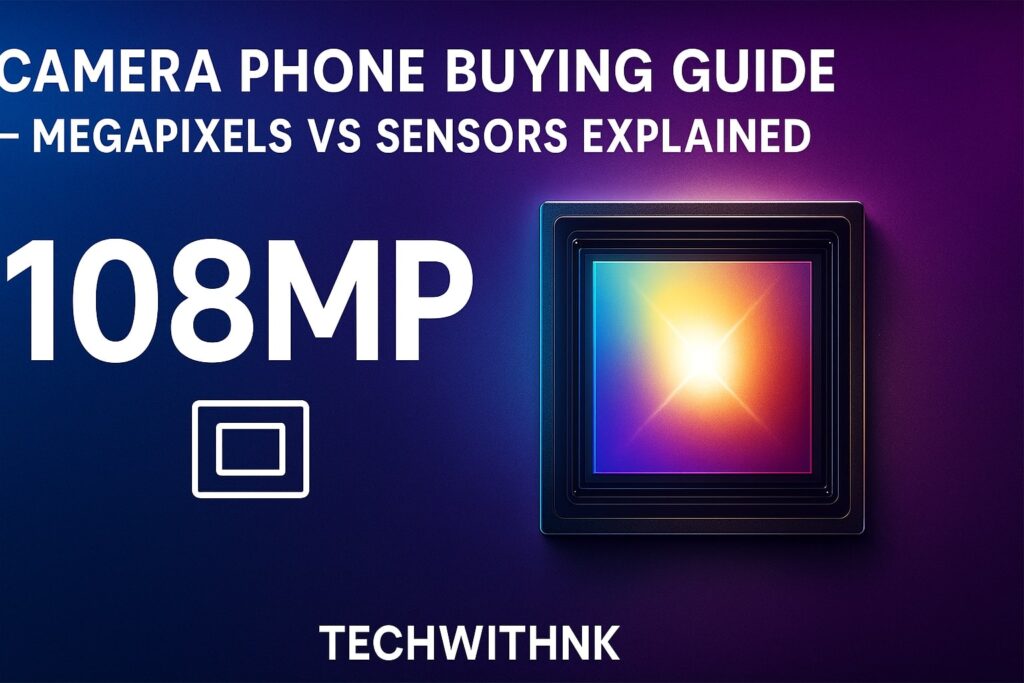
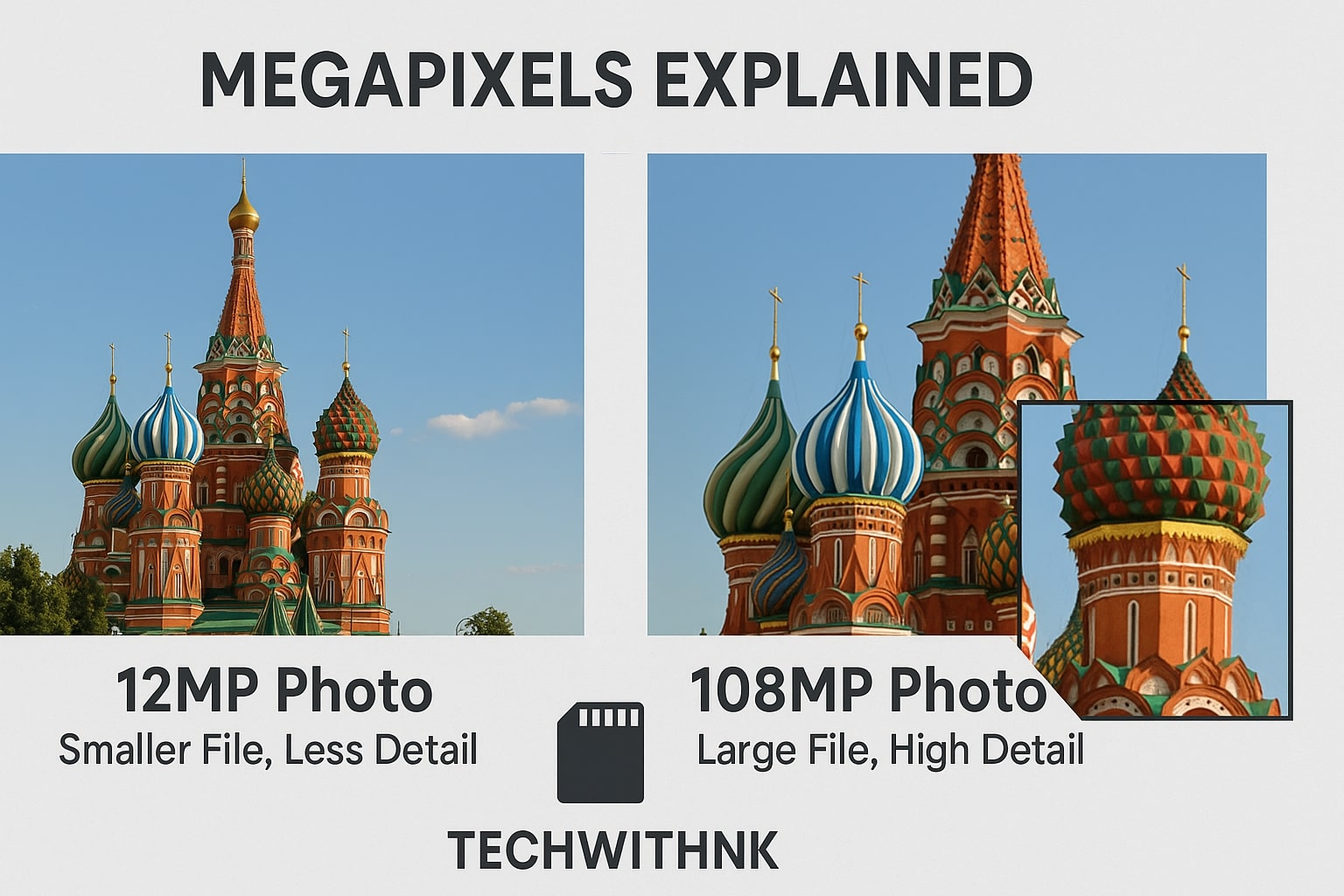
Example: A 12MP photo = 12 million pixels, while a 108MP photo = 108 million pixels.
✅ Pros of Higher Megapixels:
More detail in photos.
Better for cropping or zooming without losing sharpness.
Ideal for large prints and posters.
❌ Cons of Higher Megapixels:
Larger image file size (takes more storage).
Requires powerful processing to avoid noise.
If the sensor is small, more megapixels can actually reduce image quality in low light.
📌 What Are Camera Sensors?
The sensor is the heart of a camera. It captures light and converts it into an image. Bigger sensors can capture more light, leading to brighter, clearer, and less noisy photos.
Types of Smartphone Sensors:
1/2.55-inch sensors – Common in mid-range phones.
1/1.7-inch sensors – Found in flagship devices.
1-inch sensors – Used in premium smartphones like Sony Xperia Pro-I or Xiaomi 12S Ultra, closer to DSLR quality.
✅ Why Sensor Size Matters:
Larger sensor = better low-light performance.
More natural depth of field (blurred background).
Less noise in night photography.
📊 Megapixels vs Sensor Size: Which Matters More?
Let’s compare two real-world scenarios:
Phone A: 108MP camera with a small sensor (1/2.55″).
Phone B: 12MP camera with a large sensor (1″).
👉 In good lighting, Phone A may capture more detail due to higher megapixels.
👉 In low light, Phone B will outperform because its larger sensor captures more light.
Conclusion:
Megapixels = Detail
Sensor Size = Light & Quality
A balanced phone camera should have both a reasonable megapixel count and a large sensor size.
📷 Other Key Factors in Camera Phones
1. 📏 Pixel Size (µm)
Bigger pixels = more light absorption.
Common sizes: 0.8µm, 1.2µm, 1.8µm, 2.4µm.
Phones use pixel binning (combining pixels) to create brighter photos.
Example: A 48MP phone might output 12MP photos using quad-binning.
2. 🌙 Aperture (f-stop)
Controls how much light enters the lens.
Lower f-number = wider aperture = more light.
Example: f/1.8 is better in low light than f/2.4.
3. 🔄 OIS (Optical Image Stabilization)
Reduces blur in photos and shaky videos.
Must-have for night photography and videography.
4. 🧠 Image Processing & AI
Software algorithms enhance sharpness, colors, and night mode.
Google Pixel phones are famous for software-based photography.
5. 🎥 Video Recording Capabilities
4K and 8K video support.
60fps and slow-motion modes.
HDR video recording.
📱 Camera Phone Categories in 2025
1. Budget Phones (< ₹15,000)
Typically 48MP or 64MP with small sensors.
Good for daylight photography.
Example: Realme Narzo, Redmi Note series.
2. Mid-Range Phones (₹15,000 – ₹35,000)
50MP main cameras with larger 1/1.7″ sensors.
OIS and better night mode.
Example: iQOO Neo, Samsung Galaxy A-series, OnePlus Nord.
3. Flagship Phones (₹35,000 – ₹80,000)
50MP + 1″ sensors + advanced OIS.
Multiple lenses: ultra-wide, telephoto, periscope zoom.
Example: Samsung Galaxy S25, iPhone 16 Pro, Google Pixel 9 Pro.
4. Ultra-Premium (₹80,000+)
DSLR-like performance.
1-inch sensors, advanced computational photography.
Example: Xiaomi Ultra series, Sony Xperia Pro-I.
📝 Buying Tips: How to Choose the Right Camera Phone
Don’t just look at megapixels – check sensor size & pixel size.
Prefer phones with OIS and wide aperture for low-light shots.
If you shoot a lot of video, look for 4K/8K recording with stabilization.
For casual photography, 12MP–50MP with a large sensor is more than enough.
Check reviews and real-world samples, not just spec sheets.
📊 Comparison Table: Megapixels vs Sensor Size
| Feature | High Megapixels (100MP+) | Large Sensor (1″) |
|---|---|---|
| Daylight Detail | Excellent | Very Good |
| Low-Light Photos | Average | Excellent |
| File Size | Large | Moderate |
| Cropping Ability | Excellent | Good |
| Depth of Field | Normal | Natural Blur |
Is a 108MP camera better than a 12MP one?
Not always. A 12MP camera with a large sensor can take better photos than a 108MP small sensor camera, especially in low light.
2. Do more megapixels mean sharper images?
Only if paired with a good sensor and lens. Otherwise, higher megapixels can just add noise.
What is pixel binning?
It’s a technique where multiple small pixels combine into one larger pixel to capture more light. For example, 48MP → 12MP output.