Google Explained: History, Products, Business Model & Future (2025)

Google

When you think of the internet, one name almost instantly comes to mind: Google. What began as a research project at Stanford University has evolved into the most powerful technology company in the world, shaping how billions of people access information, communicate, navigate, shop, and even think.

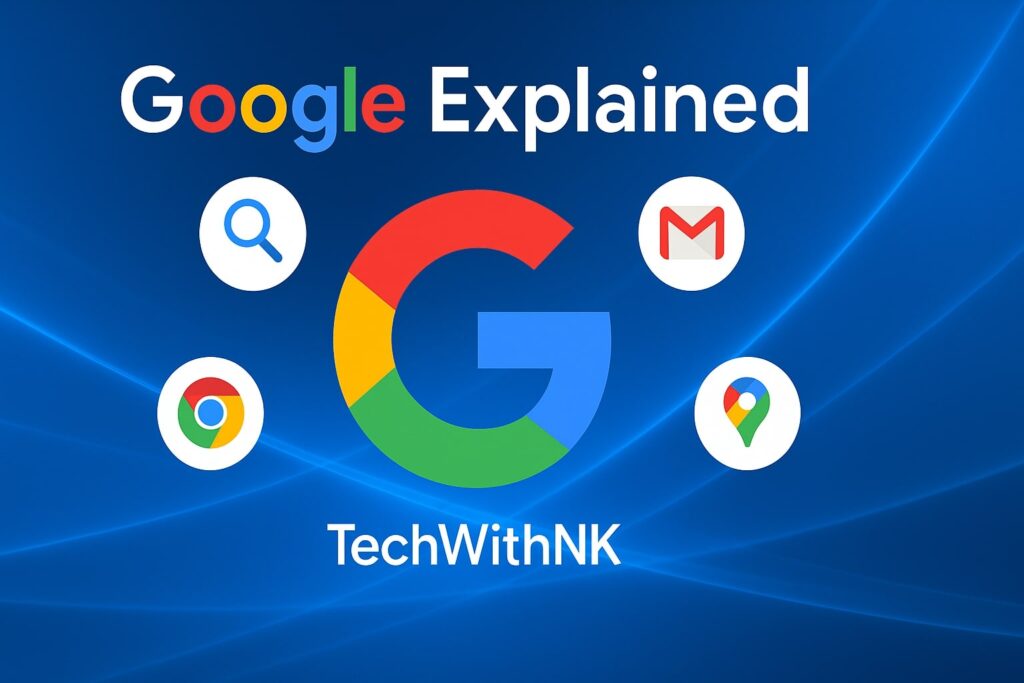
Google is more than just a search engine. It is a tech ecosystem that powers smartphones (Android), dominates online advertising (Google Ads), provides business tools (Google Workspace), leads in video content (YouTube), drives navigation (Google Maps), innovates in cloud computing (Google Cloud), and pushes boundaries in artificial intelligence (Google DeepMind, Gemini AI).

This blog explores Google’s journey, ecosystem, revenue model, controversies, and future directions.

History of Google

Founding Story

Google started in 1996 as a research project by Larry Page and Sergey Brin, Ph.D. students at Stanford University. The idea was to create a search engine that ranked web pages based on backlinks — called BackRub.

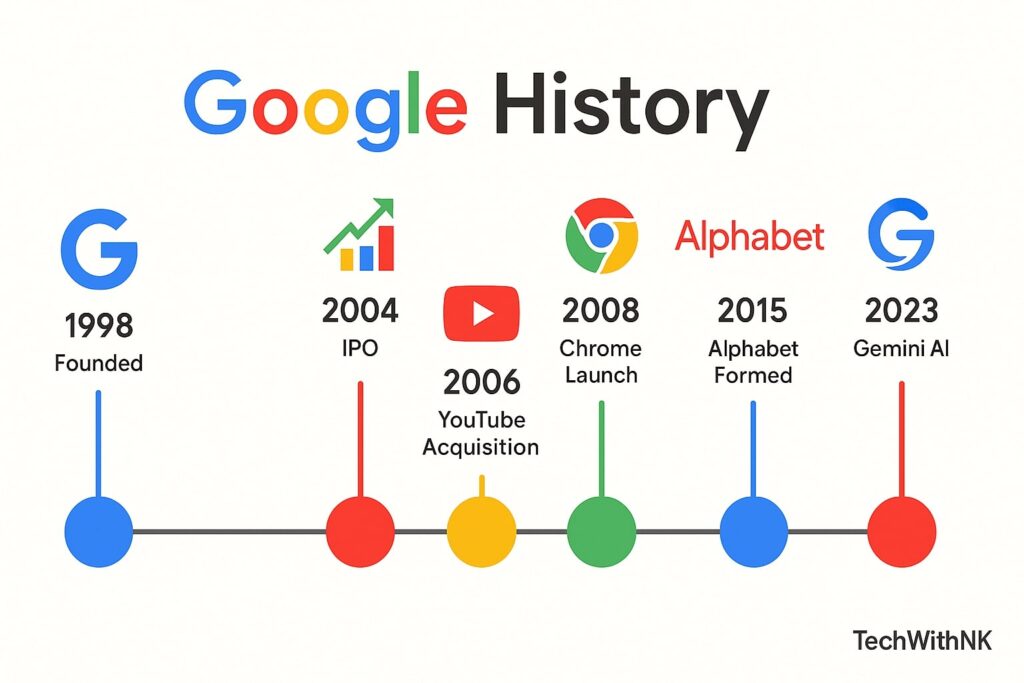
In 1998, Google was officially founded. The name comes from the mathematical term “googol” (1 followed by 100 zeros), symbolizing the mission to organize the vast information of the internet.


Early Growth

  • 1999: Google received $25 million in venture capital.

  • 2000: Became the largest search engine, partnering with Yahoo.

  • 2001: Eric Schmidt joined as CEO.

  • 2004: Google went public (IPO), raising $1.67 billion.

Becoming Alphabet Inc.

In 2015, Google restructured under Alphabet Inc., making Google its largest subsidiary. This allowed diversification into other fields (healthcare, self-driving cars, smart devices, etc.).

Google

Google’s Ecosystem & Products

Google is no longer just a search engine — it’s a universe of products that billions of people rely on daily.

Google Search

  • The world’s #1 search engine with over 90% market share.

  • Handles over 8.5 billion searches per day.

  • Uses advanced algorithms, machine learning, and AI (like RankBrain, BERT, MUM) to deliver results.

Google Ads & Marketing

  • Google earns most revenue through advertising.

  • Google Ads allows businesses to show ads in search results, YouTube, and partner sites.

  • Google AdSense lets website owners earn money by displaying ads.

Gmail

  • Launched in 2004 with 1GB storage, Gmail revolutionized email.

  • Now, it has over 1.5 billion users.

  • Features: Smart Compose, AI spam filters, integration with Workspace.

YouTube

  • Acquired in 2006 for $1.65 billion.

  • Now the second most visited website in the world.

  • Over 2.7 billion monthly users.

  • Main revenue source: Ads, YouTube Premium, Super Chat, Memberships.

Google Maps & Navigation

  • Launched in 2005, used by billions for directions, traffic updates, and businesses.

  • Powers ride-sharing apps, food delivery, logistics.

  • Integration with AR (Live View).

Android & Mobile Ecosystem

  • Acquired in 2005, Android is now the world’s most used mobile OS (70% market share).

  • Google Play Store connects apps, games, and media.

  • Powers Pixel phones, wearables, smart TVs, and more.

Google Chrome & Web Tools

  • Chrome browser launched in 2008, now the #1 browser worldwide.

  • Tools: Google Docs, Sheets, Drive, Calendar → part of Google Workspace.

  • Free & collaborative tools dominate education and business.

Google Cloud

  • Competes with AWS & Microsoft Azure.

  • Provides cloud storage, AI/ML services, enterprise solutions.

  • Major clients: Spotify, Twitter, PayPal.

Google AI & DeepMind

  • Google AI develops natural language, image recognition, and robotics.

  • DeepMind (acquired 2014) achieved breakthroughs like AlphaGo, protein folding predictions.

  • Gemini AI is Google’s answer to OpenAI’s ChatGPT.

Hardware (Pixel, Nest, Fitbit)

  • Pixel smartphones, Chromebooks, Nest smart home devices, Fitbit wearables.

  • Competing with Apple’s hardware ecosystem.

Google’s Business Model

Google’s main revenue comes from advertising.

  • Ads (80% of revenue): Search ads, YouTube ads, AdSense.

  • Cloud (10–15%): Enterprise solutions, AI services.

  • Hardware & Other (5–10%): Pixel, Nest, Fitbit, Google Play.

2024 Revenue: $307 billion (Alphabet’s annual report).

Impact of Google

On the Internet

  • Made information universally accessible.

  • Standardized online advertising.

  • Created tools like Gmail, Docs, Maps.

On Businesses

  • Small businesses can reach global markets via Google Ads & Maps.

  • YouTube created the creator economy.

On Society

  • Google has changed how people learn, shop, travel, and communicate.

  • Enabled free education through YouTube, Google Scholar, Google Books.

Criticisms & Controversies

  • Privacy concerns: Tracking user data across apps.

  • Monopoly accusations: Multiple antitrust lawsuits (USA, EU, India).

  • Censorship issues: Content moderation on YouTube & Search.

  • Employee protests: Over military contracts, workplace culture.

  • Competition: Apple (iOS, Safari), Microsoft (Bing, Azure, AI), Amazon (AWS), OpenAI (ChatGPT).

Future of Google

Google’s future lies in AI, cloud, and new technologies:

  • Gemini AI → integrating generative AI into Search, Workspace, and YouTube.

  • Quantum Computing → Google’s Sycamore quantum computer.

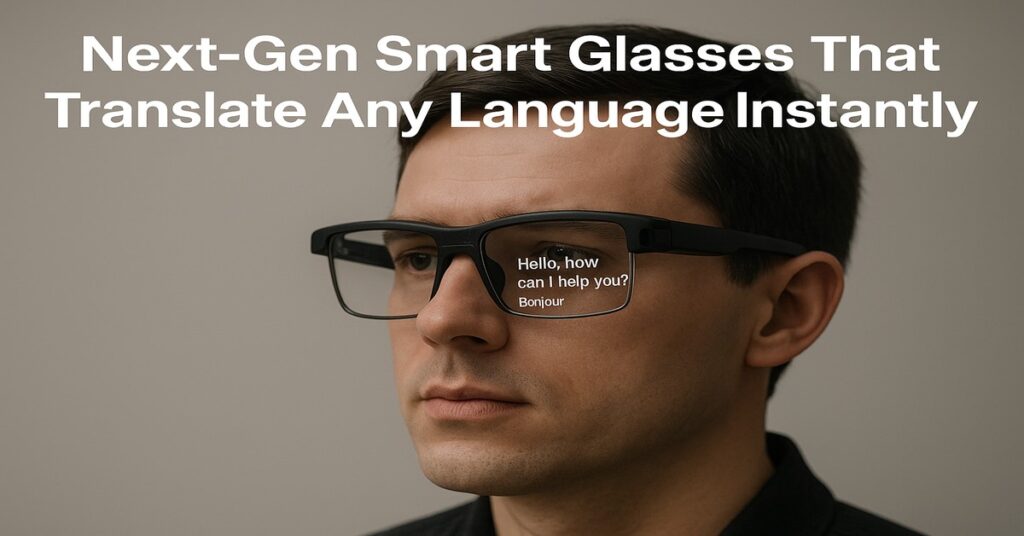
  • Augmented Reality & XR → Smart glasses, AR navigation.

  • Green Tech → 100% carbon-free energy by 2030.

Conclusion

Google has transformed from a search startup to the world’s most influential tech company. Its impact on communication, learning, business, and entertainment is unmatched. However, with growing power comes responsibility — especially regarding privacy, monopolistic practices, and ethical AI.

The future of Google lies in AI, quantum computing, AR/VR, and green technology. Whether admired or criticized, one thing is clear: Google is the backbone of the modern internet age.

Who founded Google?

Larry Page and Sergey Brin founded Google in 1998 at Stanford University.

It comes from the word googol, meaning 10¹⁰⁰, symbolizing huge information.

Alphabet Inc. (formed in 2015).

You Might Like This

Sony Home Theatre 5.1 Review – Best 1000W Systems

If you want cinema-level surround sound at home, investing in a sony home theatre 5.1 system is one of the...
boAt Nirvana Zenith Pro Review – Best TWS Under 3000

The boAt Nirvana Zenith Pro is boAt’s most ambitious true wireless stereo (TWS) earbud yet, designed to deliver premium flagship...
Best TWS Under 3000 in India (2025) – Top ANC Earbuds

If you’re searching for the best TWS under 3000, 2025 is one of the best years to buy a feature-packed...
TCL 50 Inch Smart TV 50S5K Review – FHD QLED Google TV

If you are searching for a budget-friendly premium QLED TV, the TCL 50 inch smart tv 50S5K is one of...
Xiaomi 50 Inch X Series 4K TV Review | Best Budget 4K TV 2025

If you are looking for a powerful 4K television that delivers premium features at an affordable price, the Xiaomi 50...
Xiaomi Power Bank 4i 20000mAh 33W Review: Best Fast Charger

When it comes to reliable power backup, Xiaomi continues to dominate the affordable fast-charging accessories market. Their latest xiaomi power...
Best Smartwatches Under 2000 in India (2025 Guide)

Finding the Best Smartwatches Under 2000 in India has become easier because brands like Noise, boAt, Fire-Boltt, and Fastrack are...
Best Bluetooth Speakers Under 2000 in India (2025 Guide)

If you are searching for the Best Bluetooth Speakers Under 2000, you are in the right place. In 2025, Bluetooth...
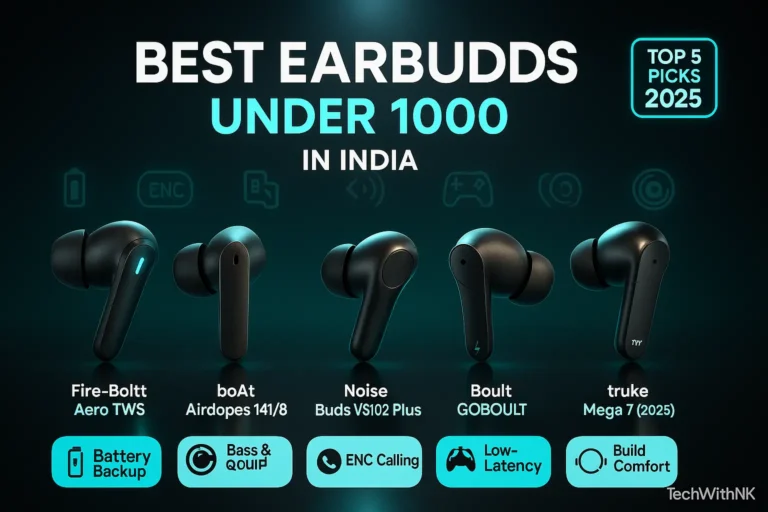
Best Earbuds Under 1000 in India (Top 5 Picks 2025)

Finding premium sound on a tight budget is now easier than ever. When it comes to buying the best earbuds...
Leave a Comment

Your email address will not be published. Required fields are marked *

Scroll to Top